
The Merode Altarpiece
A Jewel of the Early Northern Renaissance

The Merode Altarpiece: A Jewel of the Early Northern Renaissance
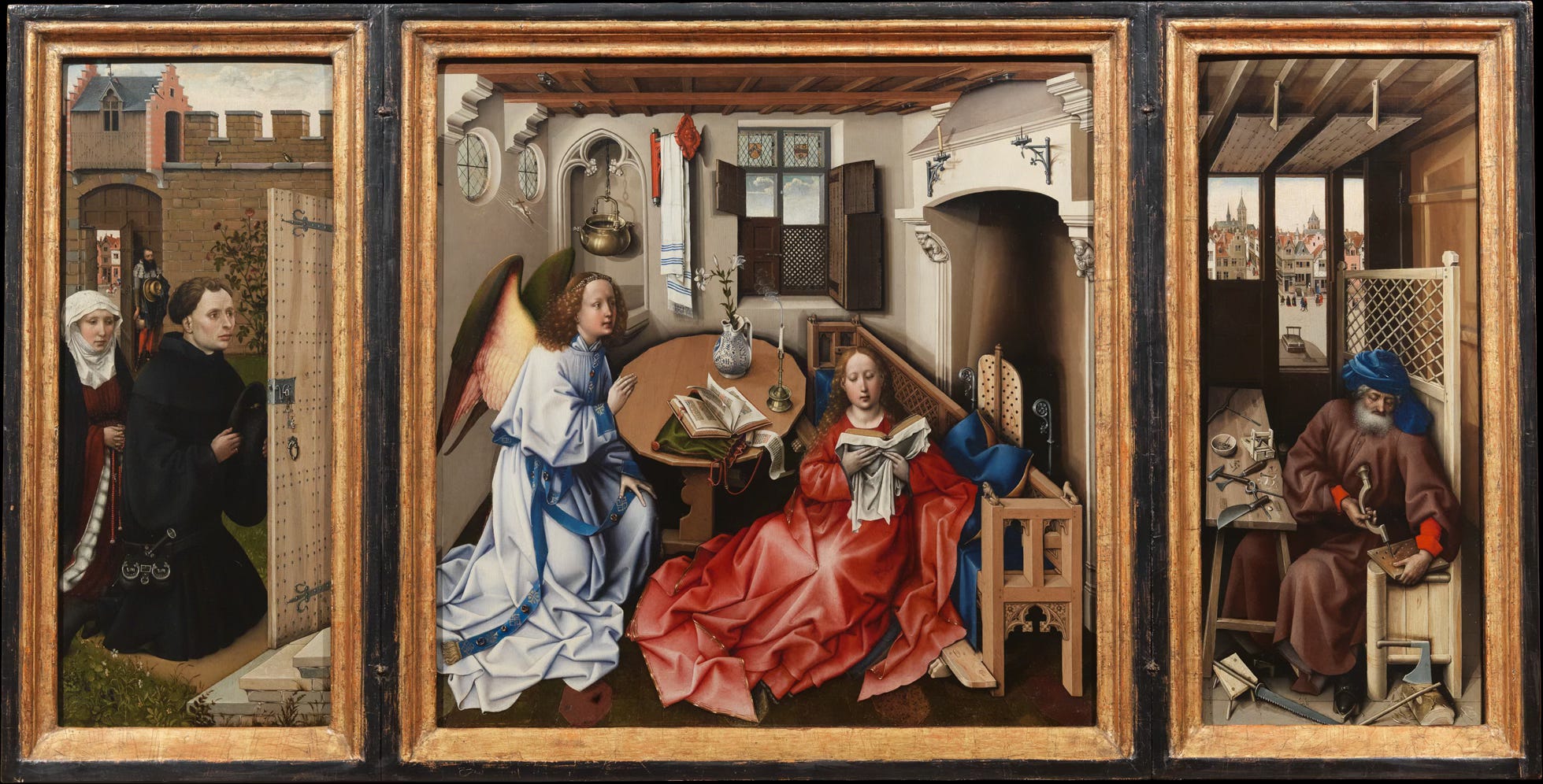
At first glance, the Merode Altarpiece might seem like a quiet, intimate work, just two feet tall and designed for private devotion. But on closer inspection, it’s a treasure trove of symbolism, innovation, and storytelling.
Painted in the workshop of Robert Campin around 1427–1432, this triptych is one of the earliest Northern Renaissance depictions of the Annunciation, the moment when the Angel Gabriel tells Mary that she will give birth to the Son of God. What makes it remarkable is how the sacred unfolds in a deeply familiar world: a Flemish town, a tidy middle-class home, and a carpenter’s workshop.
This blending of the divine with the everyday captures the very essence of the Northern Renaissance: a devotion rooted in daily life, painted with painstaking detail and rich symbolism.
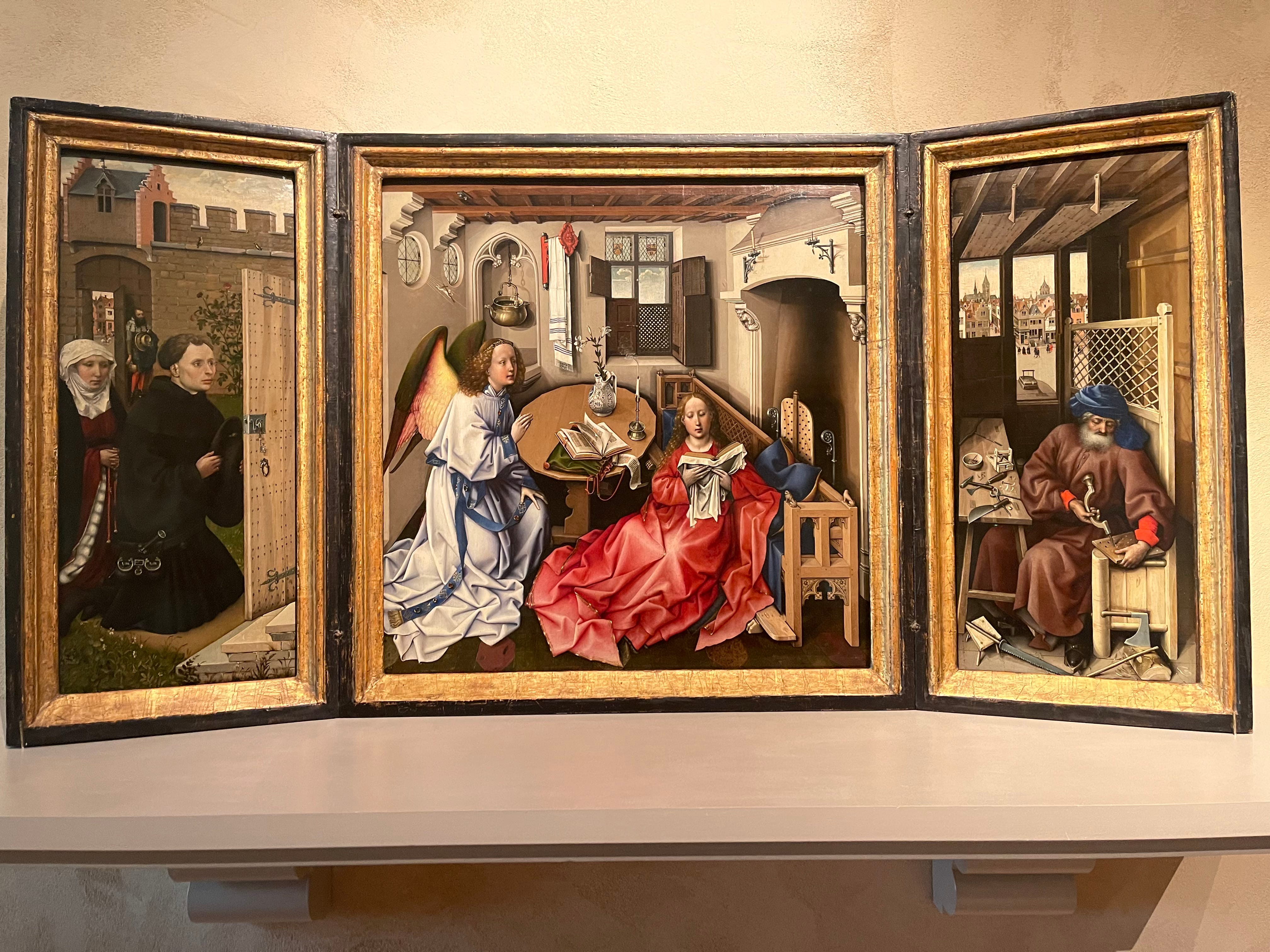
A Triptych for Devotion
The Merode Altarpiece is a triptych, meaning it’s composed of three hinged panels. Because it is modest in size, it was likely designed as a private devotional object. Its panels bring together patrons, the Annunciation, and St. Joseph, weaving a narrative that was deeply personal for its owners.
Left panel: the donor portraits in a walled garden
Center panel: the Annunciation, where Gabriel tells Mary she will bear the son of God
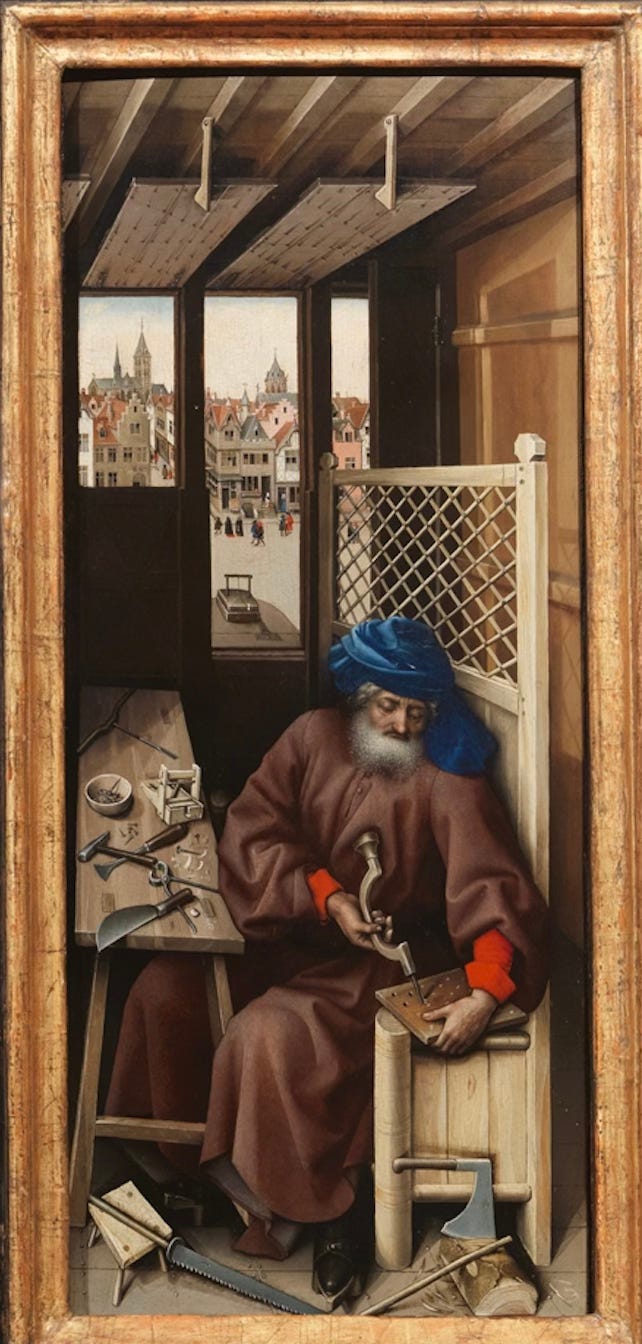
Right panel: St. Joseph at work in his carpentry studio
Together, the panels offer both an intimate meditation on faith and a vivid glimpse of 15th-century life.
The Donors and Their Garden
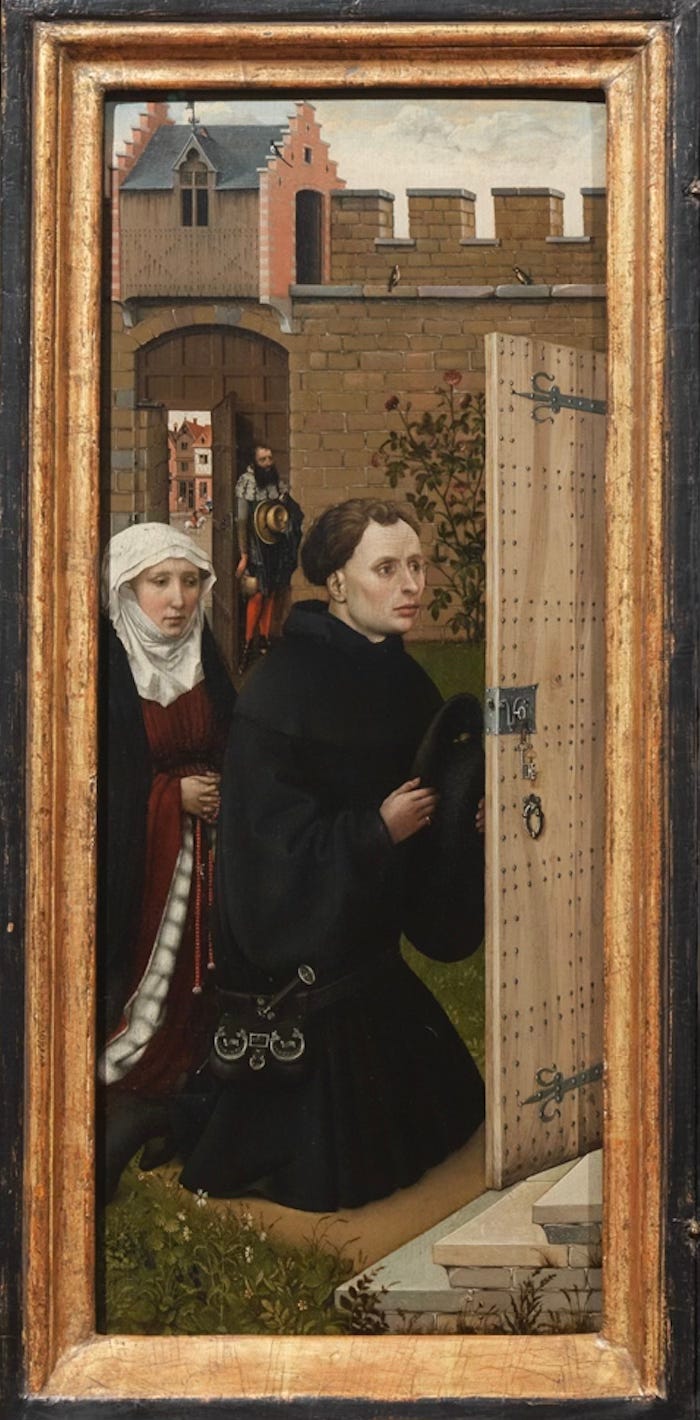
On the left panel, the patrons stand in a garden outside the Annunciation scene. Although no door connects them directly to the central panel, they appear to gaze in as witnesses to the sacred event.
Behind them, we see a hortus conclusus, a walled garden, symbolizing Mary’s virginity. Yet beyond the open gate lies a bustling Flemish town, not biblical Nazareth. This blending of sacred story with a familiar, contemporary setting was a hallmark of Northern Renaissance art, allowing patrons to feel closer to the divine.
The Annunciation at Home
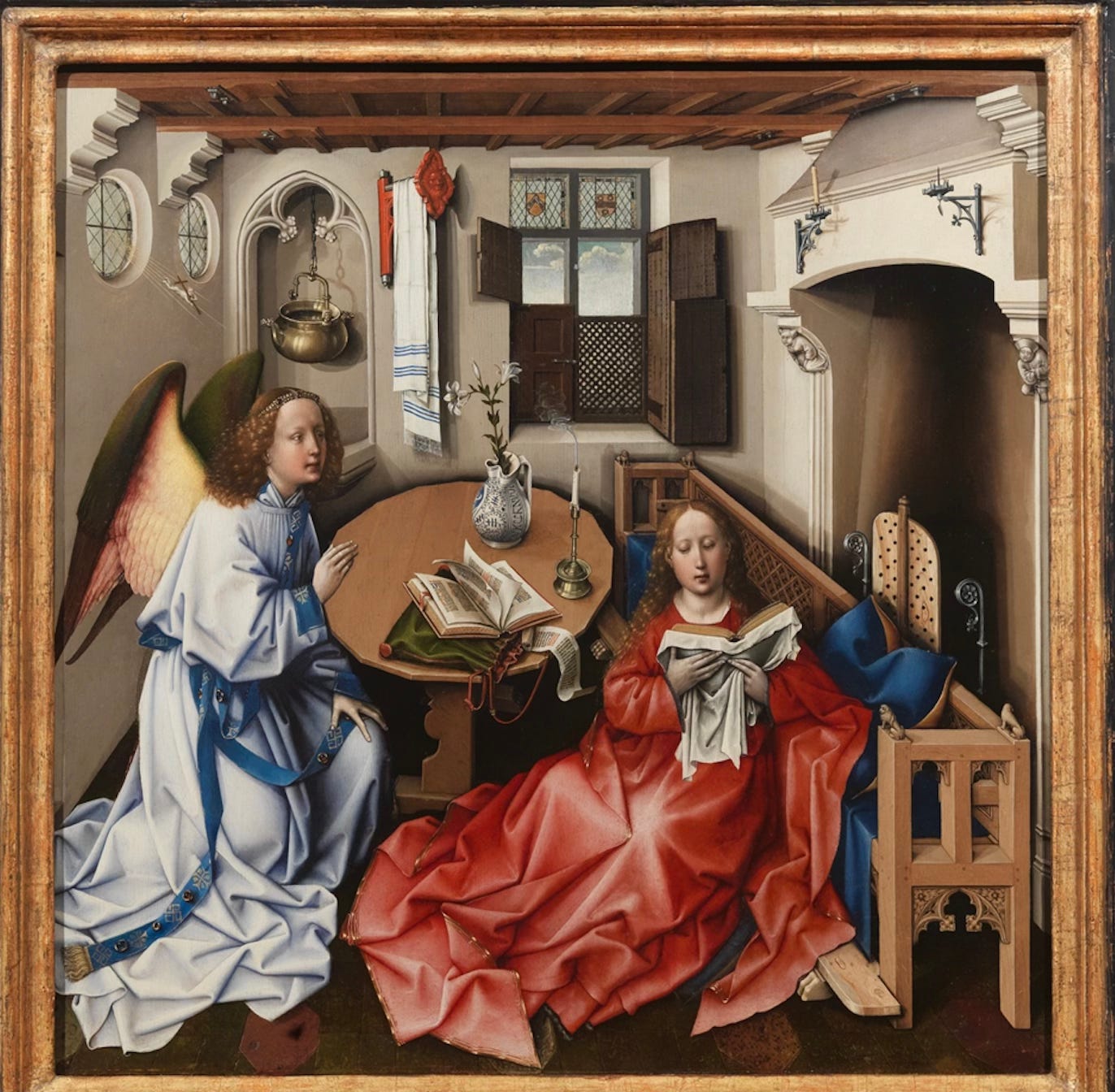
The central panel is the largest and most important. Here, Campin chose to capture the moment just before Gabriel reveals his message: Mary remains absorbed in her book, unaware of the angel’s presence.
The symbolism is layered and rich:
Mary’s unbound hair signals purity.
Her Book of Hours represents piety and devotion.
The Holy Spirit, shown not as a dove but as a tiny Christ-child carrying a cross, speeds toward her, extinguishing the nearby candle in its rush.
White lilies and a polished pot echo themes of purity and virginity.
Once again, the sacred is grounded in the familiar to the intended audience because Mary sits in a tidy, middle-class Flemish interior.
St. Joseph in His Workshop
On the right panel, St. Joseph is shown at work in his carpentry studio, surrounded by his tools. He is building a mousetrap, a clever symbol of the Crucifixion: Christ’s sacrifice was believed to be a trap for the Devil.
It’s unusual to see Joseph included in an Annunciation scene, since this event occurred before his marriage to Mary. His presence may have been a personal choice of the patrons, perhaps reflecting a particular devotion to him.
Robert Campin and the Rise of the Northern Renaissance
Though documentation is scarce, Robert Campin (c. 1375–1444) is considered one of the key figures of the early Northern Renaissance. Active in Tournai (modern Belgium), he was a successful painter and guild member, though not without scandal, as records note a jail sentence for adultery.
Campin’s workshop produced dozens of works, many of which pioneered the naturalism, symbolism, and domestic detail that would define Northern Renaissance art.
Innovation and Devotion
The Merode Altarpiece reflects broader changes in early 15th-century northern Europe:
A growing middle class. Increased wealth from trade meant more people could commission art. Unlike Italy, where mythology often mingled with religion, northern subjects focused almost exclusively on Christianity.
The rise of oil painting. Replacing tempera, oil paint allowed for richer colors, subtle textures, and luminous light effects. The Merode Altarpiece brims with these innovations, from gleaming pots to the fine folds of fabric.
Private devotion. Small works like this allowed individuals to carry their faith into daily life. Unlike monumental altarpieces in cathedrals, the Merode was created for the home—personal, portable, and deeply meaningful.
The Merode Altarpiece is a masterpiece of early Northern Renaissance art. At once richly symbolic and rooted in everyday life, it captures a moment when devotion, innovation, and uncertainty shaped the course of art history.
By blending sacred narrative with contemporary detail, Robert Campin and his workshop created not just a devotional object, but a timeless meditation on faith and humanity.
One of the jewels of the Cloisters! We’re so lucky to have this in the US!!